 Provider
Advanced Support for Better Orthodontic Outcomes
Temporary Anchorage Devices (TADs) are designed to provide a stable anchor point that allows your orthodontist to move teeth with greater precision. When the surrounding teeth can’t provide the required support, TADs help guide complex tooth movements more effectively.
The added stability reduces the need for headgear or extensive elastic wear and can make certain orthodontic treatments more efficient. For some patients, TAD’s may reduce the need for more invasive treatment.
Flexible Payment Plans
At Cory Liss Orthodontics, we believe that finances should never be a barrier to essential health care. To help manage the cost of orthodontic treatment, we offer flexible payment plans.
What Are Temporary Anchorage Devices (TADs)?
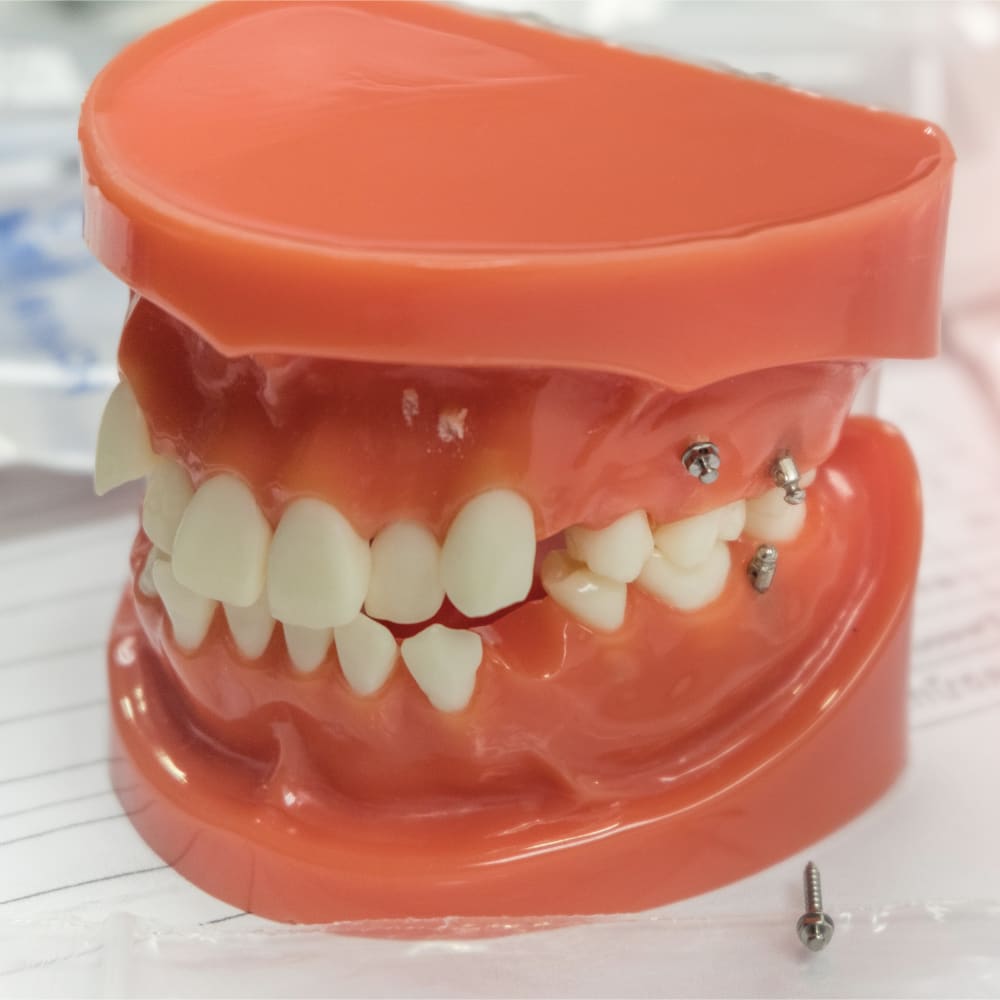
Temporary Anchorage Devices (TADs) are small titanium screws that are temporarily placed in the jawbone to provide a stable anchor during orthodontic treatment. They give your orthodontist additional support when moving teeth, allowing for more precise and efficient tooth movement in certain cases.
TADs are not permanent. They remain in place only for the portion of treatment that requires additional anchorage, and your orthodontist will remove them once they’re no longer needed.
How Are TADs Placed?
Having a TAD placed is quick, minimally invasive and typically performed using local anesthetic to numb the treatment area. Once you're comfortable, your orthodontist or oral surgeon will carefully insert the small titaium scren into the jawbone using a specialized hand instrument.
The procedure itself typically takes just a few minutes, and most patients experience little to no discomfort during the placement. After treatment is complete, the TAD is removed with ease as part of your orthodontic care.
TAD FAQs
To learn more about TADs read through the answers to these frequently asked questions from our patients at Cory Liss Orthodontics.
-
Does getting TADs hurt?
Your orthodontist or dental surgeon will use a local anesthetic to thoroughly numb the areas where your TADs are being placed. This will prevent you from feeling any pain or discomfort.
Once the anesthetic begins to wear off, you may feel some discomfort for a few hours that could be described as tightness or pressure. There should be no sharp pain or lingering discomfort associated with TAD placement.
-
Does having TADs removed hurt?
Removing TADs is considered to be a quick and pain free process.
Your orthodontist or dental surgeon will numb the area around your TADs with a local anesthetic, then simply unscrew the small implant from your jaw. The process is minimally invasive and only takes a few seconds.
-
How do I know if my TAD is infected?
Infections are rare, but symptoms may include heightened discomfort or pain, swelling, bad taste in the mouth, and fever. If you are showing any signs of an infection around your TADs, contact your orthodontist or dental professional immediately for care. Antibiotics may be required.
-
How do you eat with TADs?
On the day your TADs are being placed, only eat soft foods and avoid hot foods and beverages.
Follow your oral surgeon or orthodontist's instructions for returning to your normal diet. In most cases, you will be able to return to your regular diet within a day or two, but avoid chewing in the area of your new TADs until you have the OK from your dental professional.
-
How should I clean my TADs?
TADs can be kept clean by maintaining a thorough and diligent oral hygiene routine, including brushing after every meal and flossing regularly. Be gentle when cleaning around the area of your new TADs, and always follow instructions provided by your orthodontist.
In some cases, a mouth rinse may be recommended to help fight harmful bacteria.